
Loading…
Loading…
9 November 2026
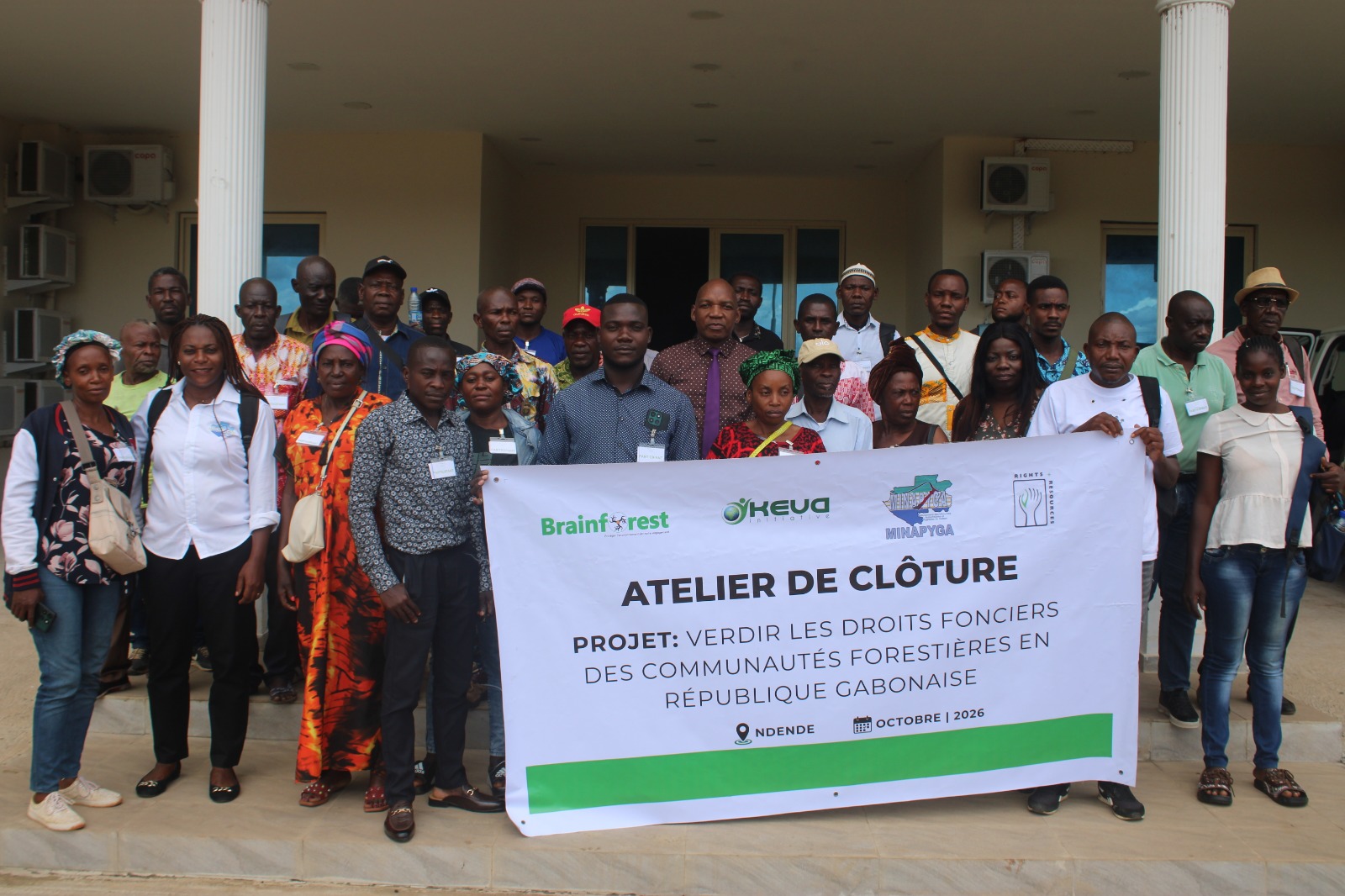
After three years of implementation, the project "Greening the land rights of forest communities in the Gabonese Republic" (GREENER) comes to an end. On this occasion, the Brainforest-MINAPYGA consortium and KEVA Initiative organized a closing workshop in the Ngounié province, in southern Gabon, to present the main achievements, share lessons learned from the experience, and reflect on the prospects for sustaining the gains for the benefit of local communities and indigenous peoples.
Securing the land rights of local communities and indigenous peoples remains a major issue in the governance of natural resources in Gabon. In a context marked by pressures on land, overlapping exploitation titles, and difficulties in accessing land, the recognition of customary rights is an essential lever to promote a more equitable and sustainable management of natural resources.
It is in this perspective that the GREENER project was implemented over three years by the Brainforest-MINAPYGA-KEVA Initiative consortium and funded by the Rights Resources Initiative (RRI). The project facilitated the structuring of 5 communities into associations, as well as supporting these communities in the creation of community forests through technical work: participatory mapping, the PDL, and the establishment of a local consultation framework on the rights of local communities and indigenous peoples. The project also aimed to strengthen the recognition and consideration of the land rights of local communities and indigenous peoples, while promoting their participation in decision-making processes regarding the management of their lands and natural resources.
The closing workshop was an important moment for reflection, dialogue, and sharing experiences among the various stakeholders of the project. It brought together institutional partners, beneficiaries, community representatives, civil society organizations, and other stakeholders.
The discussions allowed for the collection of recommendations from beneficiaries, highlighted their experiences, and shed light on the necessary conditions for the continuity of the actions undertaken. While the closure of the project marks the end of a three-year intervention cycle, it also opens a new phase, that of consolidating and sustaining the gains.